
USUST students present concepts for transforming the DIIT Cinema into a modern aerospace hub
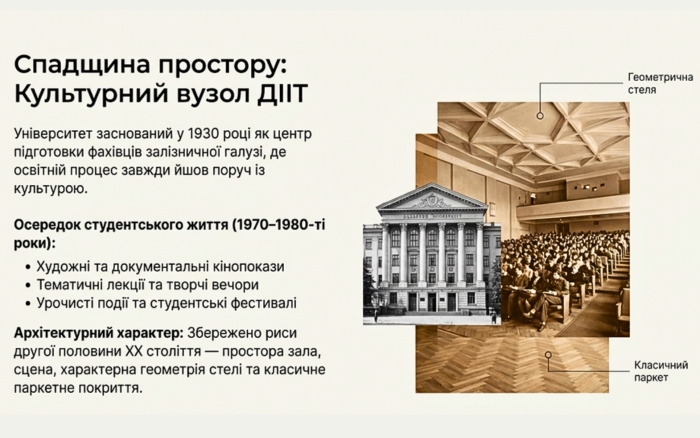
The historic DIIT Cinema building, which for decades has been an important part of the university and student life, may receive a new purpose as a modern educational and research space for the development of aerospace technologies. This was the challenge given to students of the ‘Architecture and Urban Planning’ and ‘Design’ programmes at the Ukrainian State University of Science and Technologies as part of the inter-institute educational project ‘From a historic space to an innovative aerospace hub’.
In February 2026, students visited the future reconstruction site, where they conducted photographic documentation of the building and surrounding area, studied its architectural features, and analysed its technical condition and development potential. To support their work, participants were provided with archival and contemporary construction drawings of the DIIT Cinema, enabling them to thoroughly examine the building’s spatial and planning structure and develop well-founded architectural and design solutions.
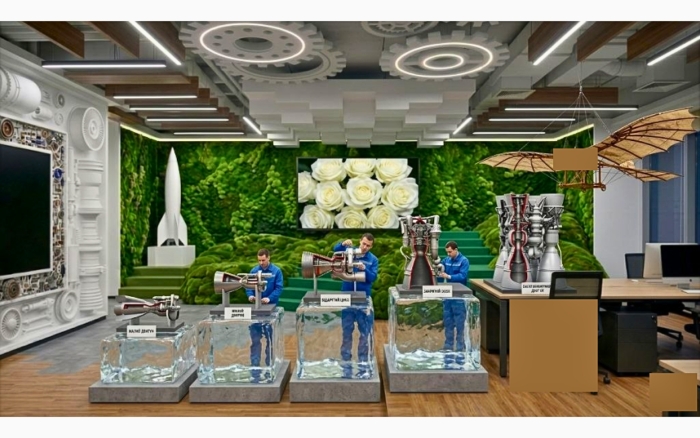
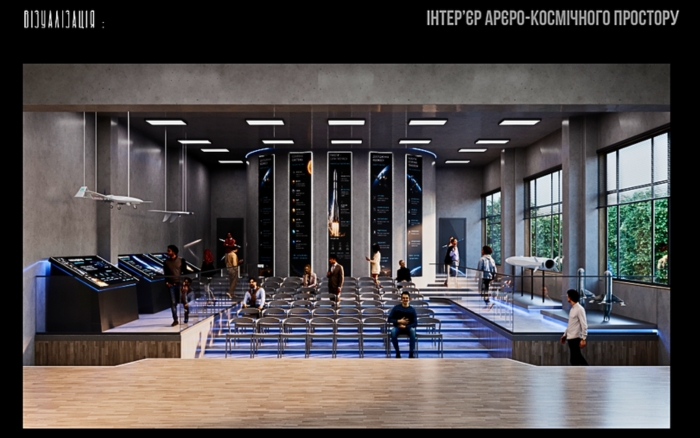
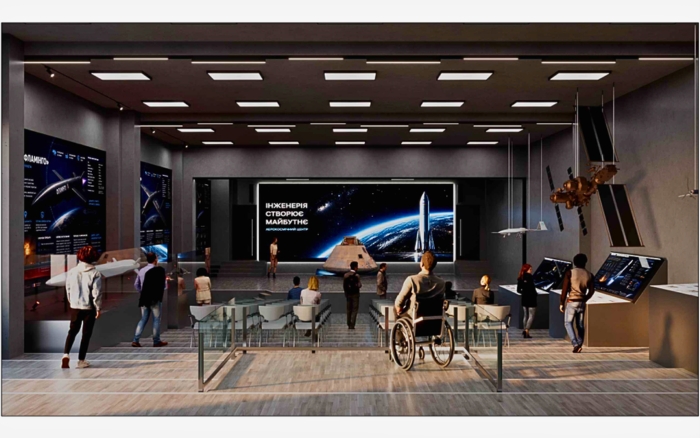
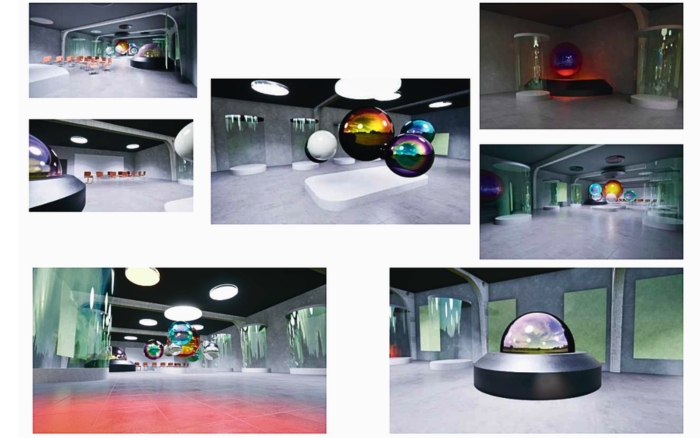
The project concept was built around the idea of combining the university’s historical heritage with the latest educational and scientific trends. According to the project brief, students were tasked with proposing reconstruction options for the cinema hall, rethinking the building’s functional purpose and transforming it into a modern multifunctional aerospace hub.
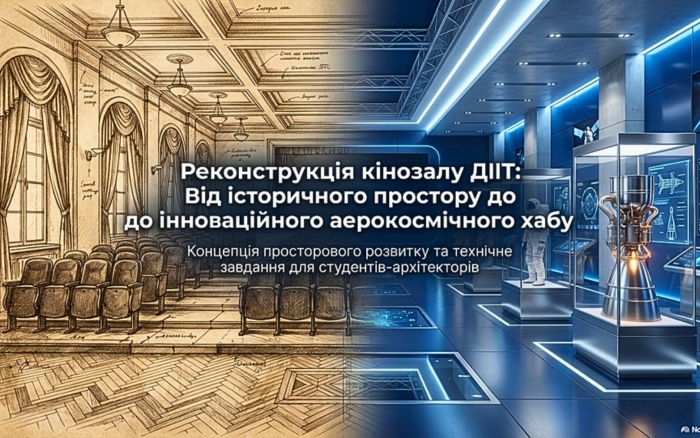
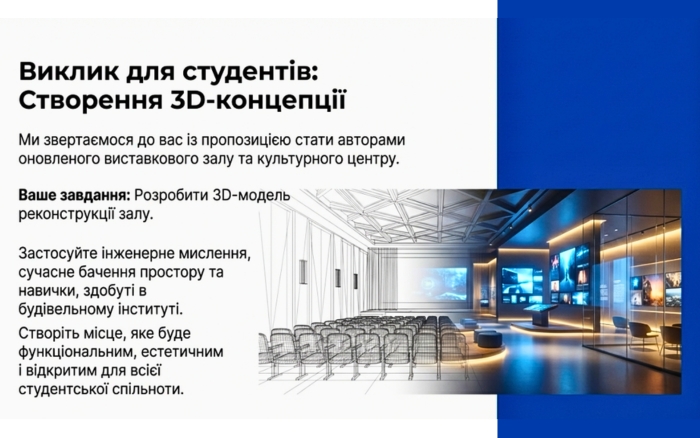
In their projects, future architects and designers viewed the cinema not only as a standalone building but also as a potential centre for interdisciplinary collaboration, science communication, engineering creativity, and aerospace education. Their proposals included the creation of modern exhibition spaces, interactive zones, educational platforms, conference facilities, venues for scientific events, and workspaces for student teams.
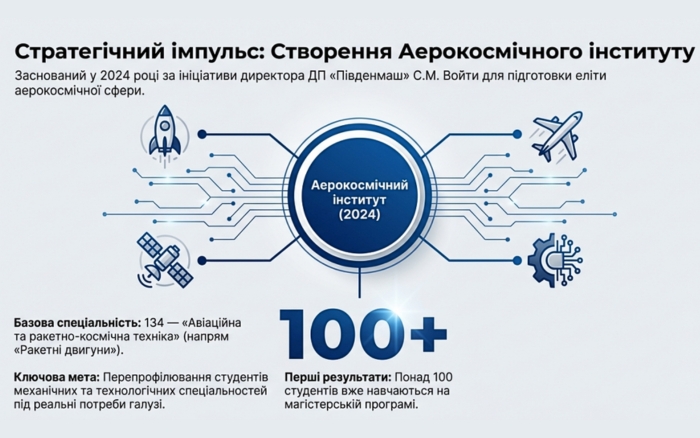
The project is particularly relevant in light of the development of the SEU ‘Aerospace Institute’ at USUST, established to train specialists in aviation and rocket-space engineering. Therefore, one of the key objectives was to create a space that would not only preserve the university’s historical memory but also reflect its current focus on the development of high-tech industries.
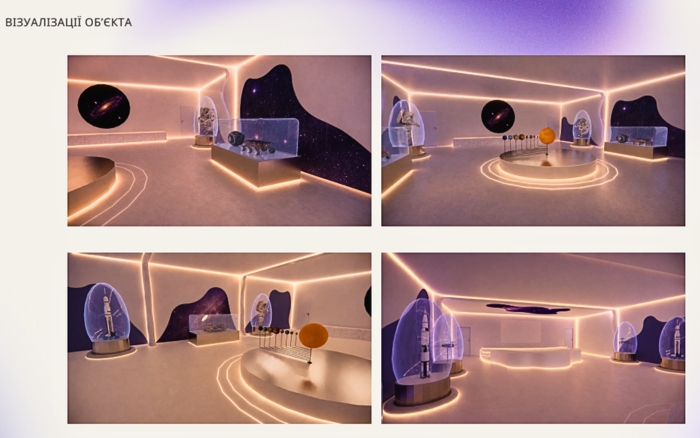
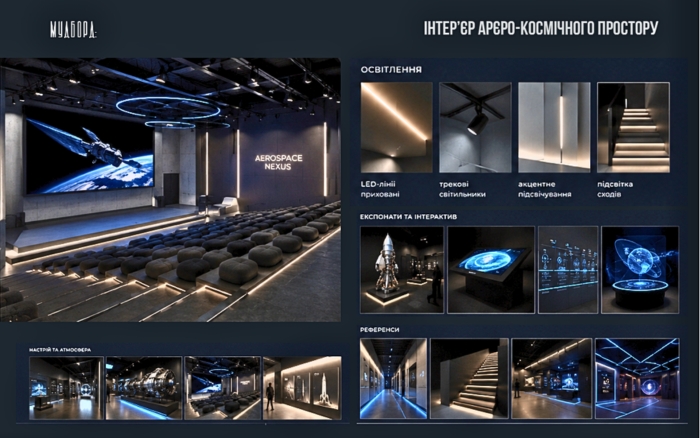
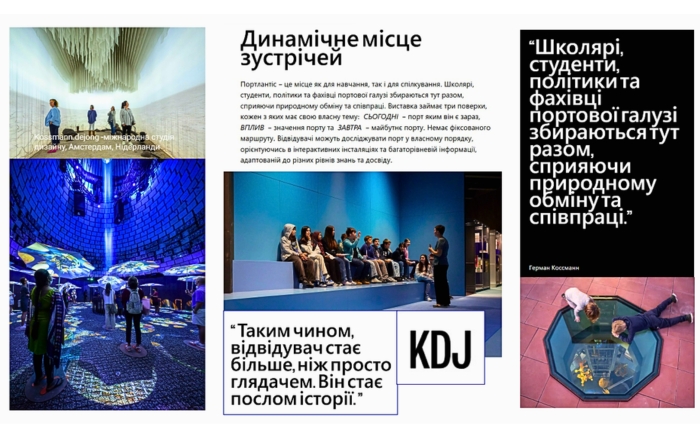
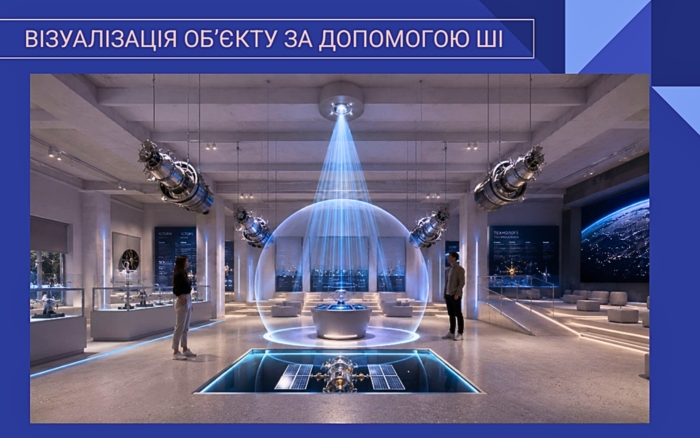
The final presentation of the projects took place online on 8 June 2026. Students presented their reconstruction concepts through presentations and professional reports, demonstrating various approaches to the spatial organisation of the future hub, the architectural image of the building, and its functional content.
A distinctive feature of the project was the cooperation between two educational and scientific institutes of USUST – ‘Prydniprovska State Academy of Civil Engineering and Architecture’ and ‘Aerospace Institute’. This interdisciplinary format made it possible to combine architectural and design expertise with perspectives on the future development of the aerospace industry and contemporary STEM spaces.
The project was implemented with the participation of faculty members from the SEI ‘Prydniprovska State Academy of Civil Engineering and Architecture’:
• Kateryna Kharchenko, Candidate of Technical Sciences, Associate Professor, head of the Department of Design and Reconstruction of Architectural Environment (diploma project supervision, speciality B2);
• Anastasiia Akhaimova, Candidate of Architecture, Associate Professor, Department of Design and Reconstruction of Architectural Environment (course ‘Interior reconstruction’, speciality B2);
• Yevheniia Samoilenko, Candidate of Architecture, Associate Professor, Department of Architectural Design and Urban Planning (course ‘Architecture of interior spaces of buildings and complexes’, speciality G17).
The pepresentatives of the SEI ‘Aerospace Institute’, USUST also participated in the discussion of the students’ work, including the Director, Irina Sukha, Candidate of Technical Sciences, Associate Professor, and Deputy Director, Yurii Mitikov, Doctor of Technical Sciences, Professor. They provided professional recommendations for the further development of the presented concepts and highlighted the high level of preparation demonstrated by the participants.
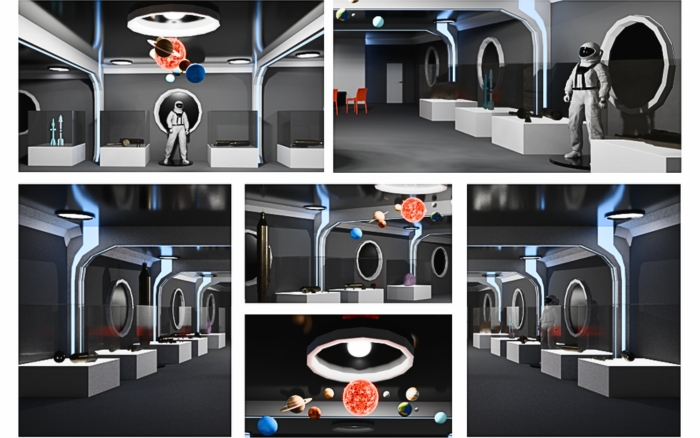
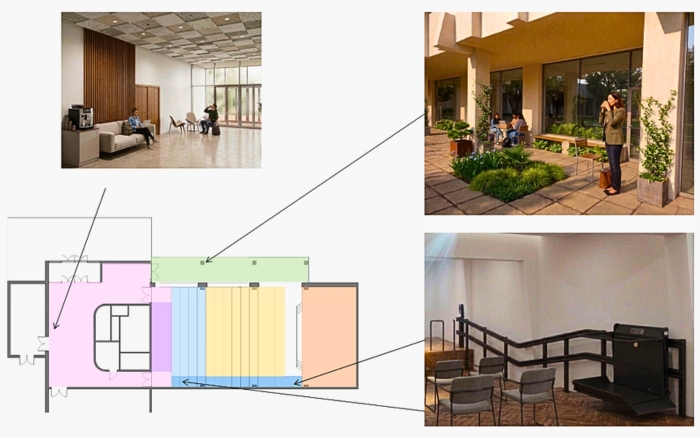
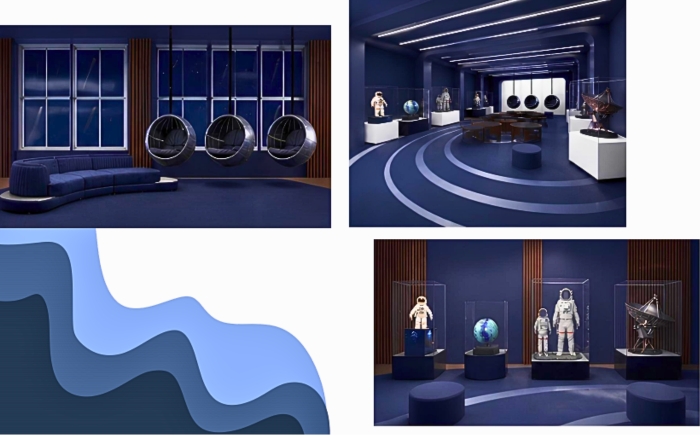
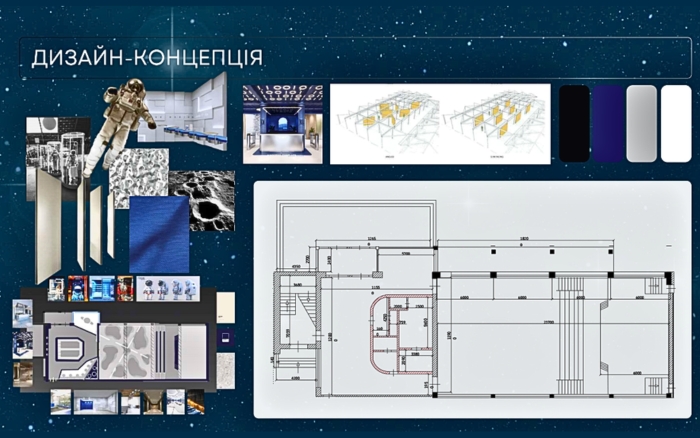
The following students presented their project proposals:
• Group DS-22 (speciality B2 ‘Design’):
- Valeriia Sierova;
- Polina Volodina;
- Valeriia Zaporozhets;
- Kseniia Liaskovska;
• Group ARCH-25 2 mn (speciality G17 ‘Architecture and Urban Planning’):
- Odarka Kobazieva;
- Anastasiia Berdetska;
- Oleksandr Poliakov;
- Valeriia Datsenko.
All student projects can be viewed via the link.
Today, leading universities around the world are actively transforming traditional educational and cultural spaces into innovation centres, STEM hubs, and platforms for interdisciplinary collaboration. The concepts presented by USUST students demonstrate the readiness of future architects and designers to address contemporary challenges by combining the preservation of historical heritage with new educational and technological opportunities.
The project became an example of practice-oriented learning, where students work on real facilities and propose solutions which can shape the future appearance of the university environment. It also demonstrated the effectiveness of cooperation between different institutes of USUST and the university’s commitment to developing innovative spaces for education, research, and creativity.